

Structure activity relationships of catecholamines and sympathomimetics
What is a catecholamine?
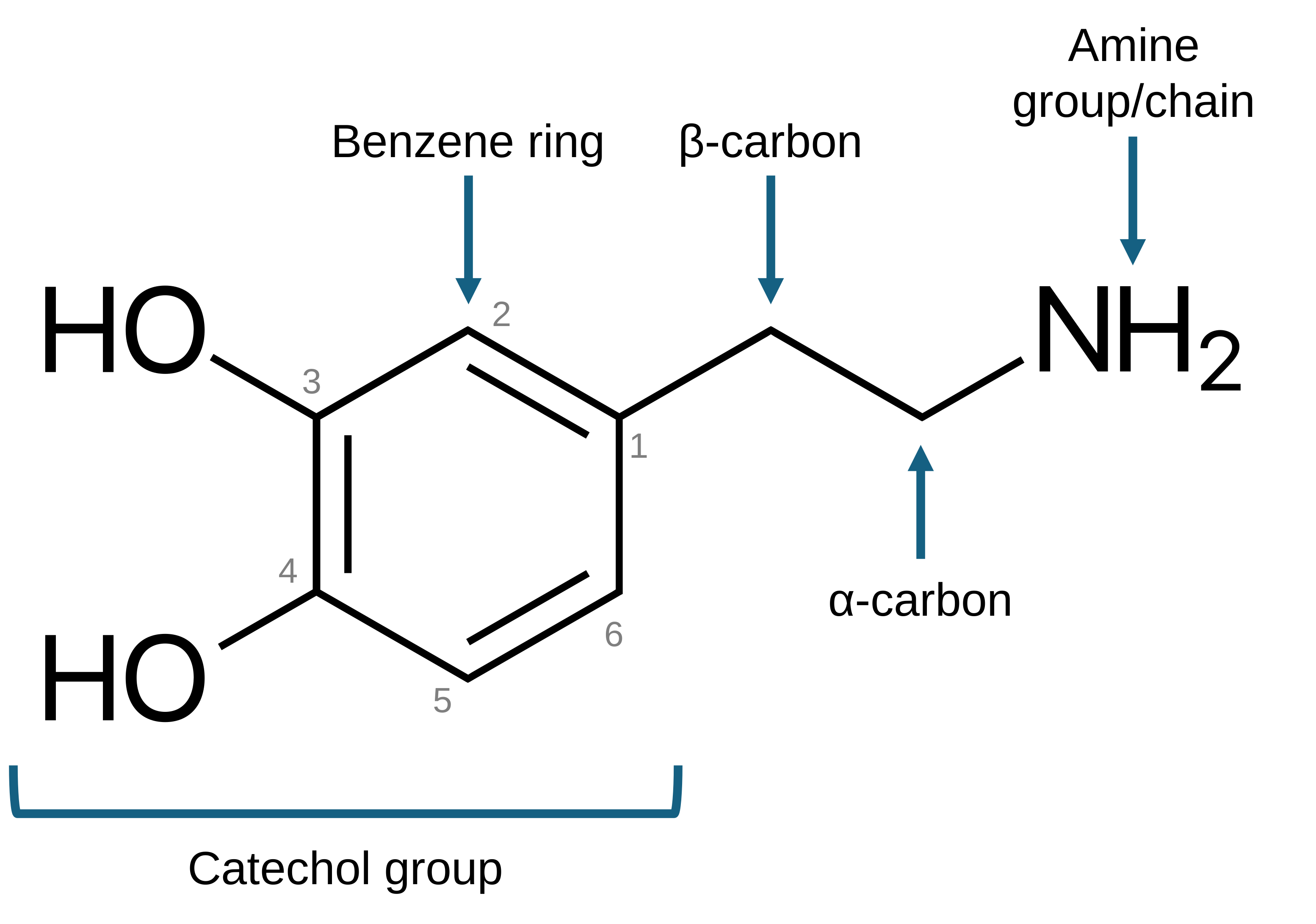
Dopamine, the prototypical catecholamine
Catecholamines are monoamine neurotransmitters that share a basic structure:
- a catechol group, comprised of a benzene ring with hydroxyl groups at the 3 and 4 positions
- an ethyl chain (carbon chain that is 2 carbon atoms long)
- a terminal amine side chain
Molecules that are structurally and pharmacologically similar to catecholamines but break one of the three rules above are known as sympathomimetics.
| Endogenous catecholamines | Synthetic catecholamines | Sympathomimetics |
|---|---|---|
| adrenaline | dobutamine | metaraminol |
| noradrenaline | isoprenaline | ephedrine |
| dopamine | salbutamol | |
| amphetamine |
Common examples of catecholamines and sympathomimetics
Structure activity relationships
If you take the 'base' catecholamine without making any modifications to its structure, you get dopamine. Modifying the structure changes its pharmacological properties. For example if you add a hydroxyl group to the β-carbon, you turn dopamine into noradrenaline.
Certain modifications change the molecule's pharmacological properties in predictable ways. The relationships that govern how a molecule's structure affects its chemical activity are known as structure activity relationships.
The following are some general rules that apply to catecholamines.
Amine side chain
- shorter amine side chains generally confer greater α-receptor activity
- longer amine side chains generally confer greater β-receptor activity
- if you take noradrenaline and add a methyl group here, you get adrenaline which trades α-activity for β-activity
- other β-agonists such as dobutamine, isoprenaline and salbutamol also have longer amine side chains
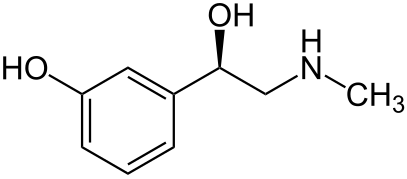
- an exception is phenylephrine which has a methyl group like adrenaline but has virtually no β-receptor activity, owing to the loss of a hydroxyl group from its catechol ring
- substitution of a strange amine chain (for lack of a better word) may block the action of MAO as in the case of isoprenaline and dobutamine
Noradrenaline | Adrenaline |
|---|---|
|
|
Isoprenaline | Dobutamine |
|
|


Monoamine oxidase (MAO) is one two major enzymes responsible for catecholamine metabolism and inactivation.
Isoprenaline and dobutamine have unique amine side chains that block MAO. However their duration of action is still short as they are still readily metabolised by catechol-O-methyltransferase (COMT).
If both MAO and COMT are blocked (e.g. metaraminol and ephedrine), the duration of action will be prolonged.
Alpha carbon
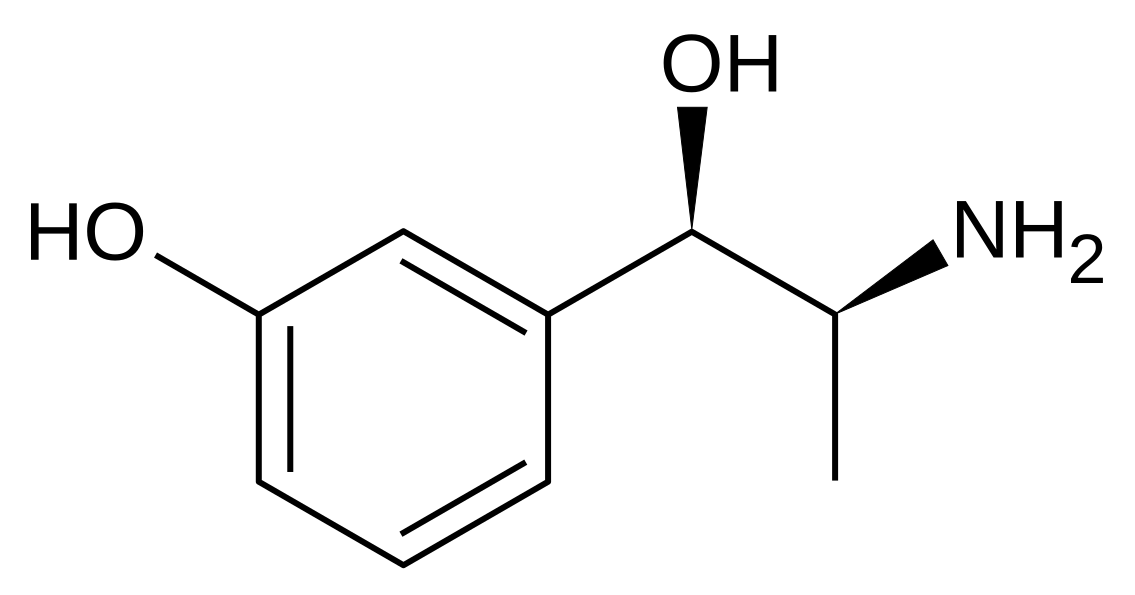
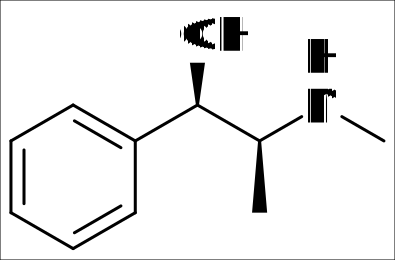
The addition of functional groups here block the action of MAO, which may increase the duration of action. Examples include metaraminol, ephedrine and amphetamine.
These molecules dwell longer in the synapse and may act as 'false neurotransmitters' by displacing noradrenaline and adrenaline into the synaptic cleft. They potentiate the effect of catecholamines and are known as indirect symathomimetics.
Metaraminol | Ephedrine |
|---|---|
|
|
Beta carbon
Adding a hydroxyl group makes increases the molecule's lipid solubility and therefore CNS penetration.
- amphetamine does not have a hydroxyl group, which is partly responsible for its psychotropic effects
- by contrast adrenaline and noradrenaline do have a hydroxyl group, which is why infusing these drugs does not make your patients high
In general, the addition of any group here increases the α- and β-agonist activity.
Noradrenaline | Adrenaline |
|---|---|
|
|
Catechol group
As described above, the catechol group is a benzene ring with two hydroxyl groups at the 3 and 4 position. If a molecule lacks one or both of these hydroxyl groups or the position is changed, the molecule is not a catecholamine. Examples include metaraminol, ephedrine, phenylephrine and salbutamol.
The loss of one hydroxyl group (e.g. metaraminol) produces the following effects:
- increases lipid solubility → greater CNS penetration
- decreases potency
- prevents metabolism by COMT → prolonged action
Losing both hydroxyl groups (e.g. ephedrine) exaggerates these effects.
| OH groups | Catecholamine? | CNS penetration | Potency | Duration |
|---|---|---|---|---|
| 2 | yes | minimal | - | - |
| 1 | no | ↑ | ↓ | ↑ |
| 0 | no | ↑↑ | ↓↓ | ↑ |
Phenylephrine | Salbutamol |
|---|---|
|
|

Note how many of these drugs have more than one modification. Take ephedrine for example.
- It has a methyl group added to its amine chain, giving it β-agonist activity, like adrenaline
- compare this to metaraminol and noradrenaline which have negligible β-agonist activity
- It has a hydroxyl group on the α-carbon, blocking the action of MAO and allowing it to work as an indirect sympathomimetic
- It has a hydroxyl group on the β-carbon, giving it some direct activity as well
- It lacks both hydroxyl groups on its catechol ring, giving it:
- high lipid solubility → high volume of distribution
- low potency (dose required is greater than with metaraminol and much greater than adrenaline/noradrenaline)
- longer duration of action due to the blocking of COMT in addition to MAO