
Receptors and secondary messenger systems
Outline the mechanisms by which chemical messengers can interact with a cell
Cell surface receptors
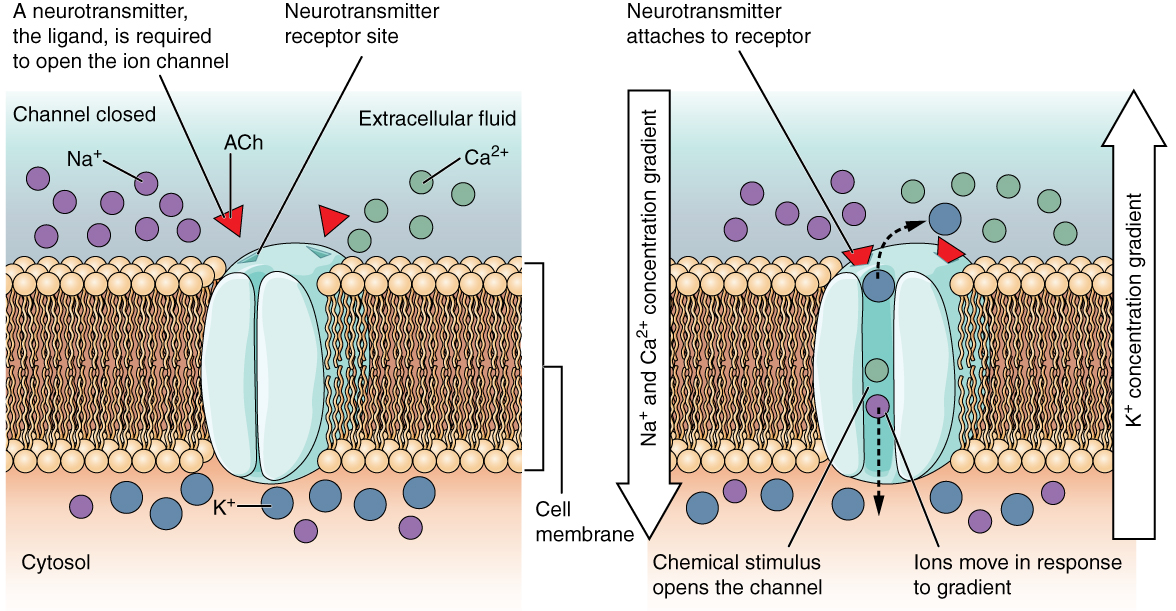
Ionotropic receptors
- also known as ligand gated ion channels
- a compound (ligand) binds to and activates a receptor which acts as an ion channel, allowing inward or outward flux of an ion
- e.g. ACh binds to the nicotinic ACh receptor, which allows the passage of cations
Metabotropic receptors
- a compound binds a receptor, causing conformational change in the receptor
- a downstream effect is mediated via a secondary messenger system
- e.g. G-protein coupled receptors, such as adrenergic receptors
Ligand-gated channels by OpenStax CC BY 4.0 via Wikimedia Commons
Intracellular receptors
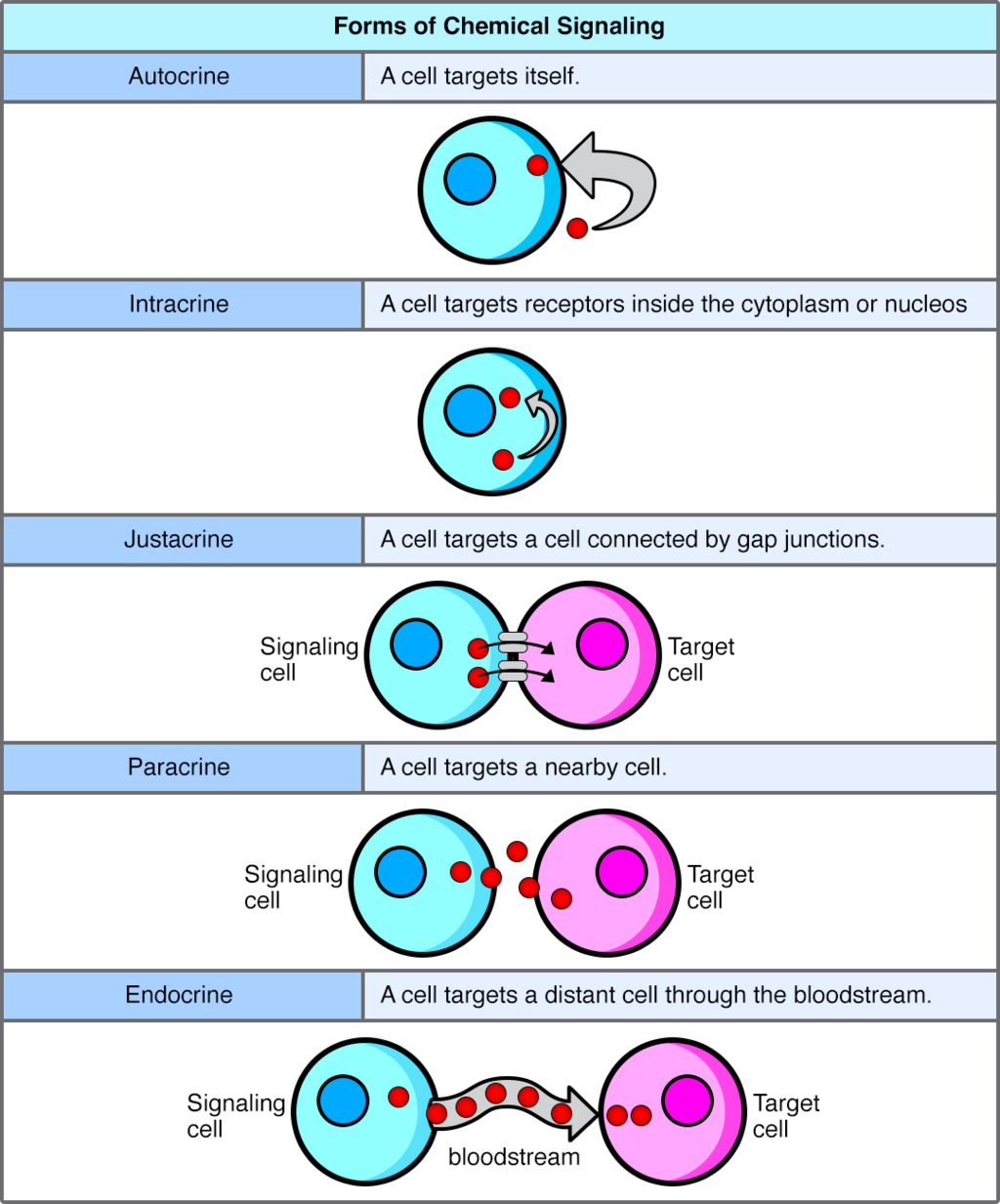
A compound (e.g. a hormone) first diffuses into the cell before binding a receptor that is inside it. Intracellular receptors can act as ionotropic or metabotropic receptors.
Intracellular receptors can be subclassified according to the receptor location.
Cytoplasmic receptors
- the receptor is located within the cell cytoplasm
- e.g. glucocorticoid receptor
- glucocorticoids bind the receptor causing conformational change and active transport into the nucleus to alter gene transcription
Nuclear receptors
- the receptor is located within the nucleus
- e.g. thyroid hormone receptor
- thyroid hormones bind the receptor, which causes an increase in the rate of gene transcription
Organelle receptors
- the receptor is bound to an organelle
- e.g. ryanodine receptor
- calcium binds to the ryanodine receptor which is bound to the sarcoplasmic reticulum in skeletal and smooth muscle.
- its activation causes the release of more calcium from the sarcoplasmic reticulum.
What are secondary messenger systems?
A secondary messenger system is a signalling mechanism where a primary messenger activates a receptor, leading to the generation or activation of new signalling molecules (secondary messengers) that amplify and transmit the signal to effector proteins.
Secondary messenger systems typically have multiple downstream effects. Some important examples and brief description of effect are provided here.
| Precipitant | Secondary messenger | Example effect |
|---|---|---|
| α1 receptor activation → activates PLC | ↑ IP₃/DAG | ↑Ca → vasoconstriction |
| β1 receptor activation → activates adenylyl cyclase | ↑ cAMP | ↑Ca → inotropy |
| NO activates guanylyl cyclase | ↑ cGMP | ↓Ca → vasodilation |
| insulin receptor activation → activates tyrosine kinase | many, incl IP₃/DAG/cAMP | many anabolic functions |
What are the methods of cell-cell signalling?
Cell-cell signalling occurs via secretion of a signalling molecule, for example a hormone or neurotransmitter.
Autocrine
- a secreted molecule returns to act on same cell
- e.g. noradrenaline acts on pre-synaptic alpha2 receptors to decrease further release of noradrenaline
Juxtacrine
- a membrane-bound ligand binds a membrane-bound receptor on a neighbouring cell
- e.g. platelet-platelet cohesion via fibrinogen and vWF in primary haemostasis
Paracrine
- a secreted molecule acts on a nearby cell
- includes all neurotransmission between neurons (aka synaptic signalling)
- e.g. chemokines are released by injured tissue, acting on nearby leucocytes to induce chemotaxis
Endocrine
- a secreted molecule acts on a distant cell
- includes all hormones that travel via circulation (e.g. adrenal and thyroid hormones)