

Cell structure
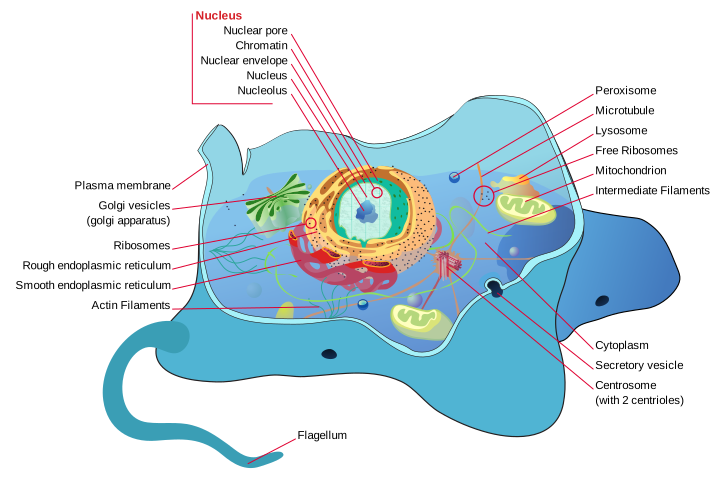
Outline basic cell structure
Mnemonic - MCG MEN
Membrane, cytoplasm, Golgi apparatus, mitochondria, endoplasmic reticulum, nucleus
Cell membrane
- 10nm thick
- semipermeable structure made from phospholipid bilayer keeps internal composition relatively constant in presence of ECF changes due to impermeability to some compounds
- contains membrane proteins and channels which allow interaction with other cells or messenger systems
- bound to microtubular filaments (e.g. actin) which anchor and support the cytoskeleton
- more detail here
Cytoplasm
- internal part of the cell that contains cytosol and proteins that form cytoskeleton
- organelles are housed here
- some important processes occur here e.g. glycolysis
Golgi apparatus
- complex of vesicles and folded membranes
- modify and package proteins into vesicles for exocytosis
- create lysosomes that break down various cell components such as DNA, proteins and polysaccharides
Mitochondria
- consists of outer membrane, inner membrane, and intermembrane space
- produce ATP via aerobic metabolism
- involved in citric acid cycle, fatty acid metabolism, and urea cycling
- the electron transport chain occurs across the inner membrane
- more detail on mitochondria here
Endoplasmic reticulum (ER)
- network of tubular systems, consisting of rough and smooth ER
- rough ER synthesises proteins
- smooth ER lacks ribosomes and produces fat and steroid hormones
Nucleus
- contains DNA
- regulates gene expression to modulate organelle activity
- the nucleolus (part of the nucleus) contains mRNA
- RBC is anuclear, skeletal muscle is multinuclear, almost all other cells are mononuclear
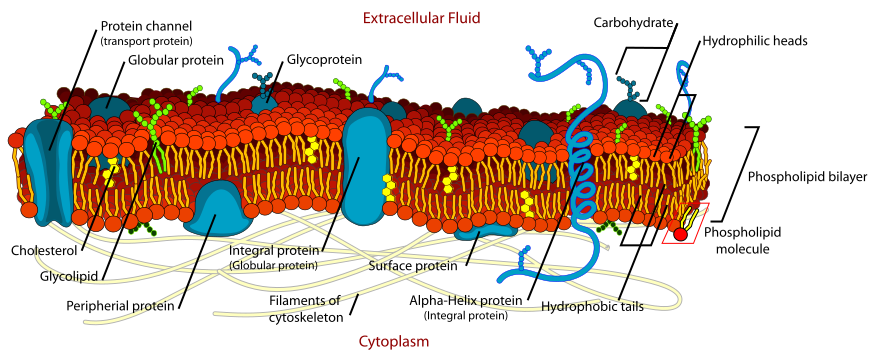
Outline cell membrane structure and function
Proteins
Randomly distributed across the cell membrane.
Integral proteins (aka transmembrane proteins)
- so called because they are integrated into the cell membrane
- span the width of the cell membrane
- examples
- many receptors, including all ion channels and G-protein coupled receptors
- transmembrane pumps, e.g. Na-K ATPase
- some carrier proteins and cell-bound enzymes
Peripheral proteins
- inner surface proteins
- bound to the inner surface of the cell
- includes many receptors
- are often bound to the cytoskeleton to provide cell structure
- e.g. cytochrome C
- outer surface proteins
- bound to the outer surface of the cell
- includes many receptors
- may be involved in cell-cell signalling and adhesion
- examples
- ABO antigens
- MHC-I and MHC-II, used for immune signalling
Glycoproteins and glycolipids
- proteins/lipids that communicate with the outer surface may have carbohydrate moieties
- allow interaction with other structures
- examples
- ABO antigens (which are both glycolipids and glycoproteins)
- MHC proteins (glycoproteins)
Lipids
Phospholipid bilayer
- hydrophilic (polar) heads face outward
- hydrophobic (non-polar) tails face inward
- forms a flexible, fluid-like structure
Cholesterol
- interacts with phospholipid tails, preventing the membrane from being either too rigid or too fluid
- strengthens the cell membrane
- decreases its permeability to water, essential for maintaining concentration gradients across the cell membrane
- involved in endocytosis
Glycolipids
ON THIS PAGE