

Mitochondria
Outline the structure of mitochondria
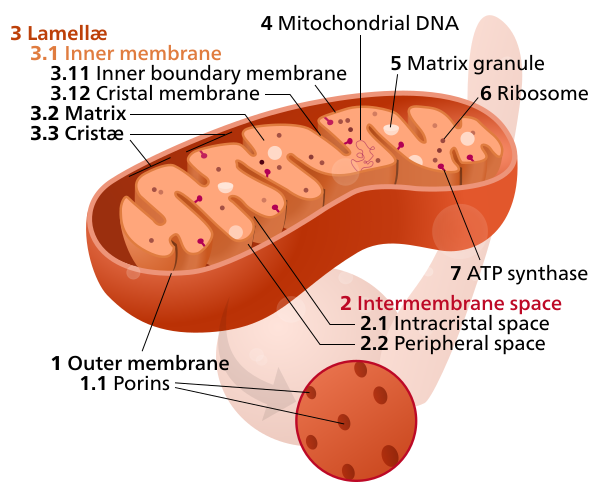
Mitochondria are ellipsoid organelles within cells that have many important functions, the most important of which is to generate energy (ATP) via aerobic metabolism.
Outer phospholipid membrane
- separates it from the cell cytoplasm
- contains porins through which small molecules can diffuse
- particles less than 5000Da diffuse freely (e.g. pyruvate, amino acids, short and medium-chain fatty acids)
- large-chain fatty acids require the carnitine shuttle to enter mitochondria
Intermembrane space
- the space between the inner and outer phospholipid membranes
- H+ is pumped into this space across the inner membrane, creating an electrochemical gradient that facilitates chemiosmosis and ATP synthesis via the electron transport chain
Inner phospholipid membrane
- arranged in folds called cristae
- membrane-bound proteins and enzymes participate in redux reactions in the electron transport chain
Inner mitochondrial matrix
- contains many enzymes, mitochondrial DNA, ribosomes, granules (containing calcium, pro-apoptotic proteins, phospholipids and more)
- many important processes occur here, such as the citric acid cycle, beta-oxidation and the urea cycle
Outline the functions of mitochondria
A bad mnemonic - MR HUMP CAT
Redux reactions
- Metabolic functions
- Reactive oxygen species (ROS)
Synthetic functions (HUMP)
- Haem synthesis
- Urea cycle
- Mitochondrial DNA
- Phospholipids
Regulatory functions (CAT)
- Calcium homeostasis
- Apoptosis
- Thermogenesis
Redux reactions
Metabolic
- produces net 30-32 ATP from 1 glucose molecule via the citric acid cycle and electron transport chain (aerobic metabolism)
- beta-oxidation of fatty acids generates acetyl-CoA which is used in the citric acid cycle and electron transport chain
- ketogenesis occurs in mitochondria from acetyl-CoA
- the electron transport chain takes place across the inner mitochondrial membrane
Production of reactive oxygen species (ROS)
- electrons reduce → , a reactive oxygen species
- reacts further to form (hydrogen peroxide), also a reactive oxygen species
- ROS may cause cell destruction (oxidises cell membrane)
- used in various bodily functions, such as
- secondary messenger systems (e.g. required for thyroid peroxidase function in thyroid follicular cell)
- macrophage respiratory burst function to destroy phagocytosed pathogens
Synthetic functions
Haem synthesis
- the initial and final steps of haem synthesis occurs within mitochondria
- substrates are transported out of the mitochondria for the intermediate steps, before being transported back inside
Urea cycle
- the cycle through which ammonia is converted to urea in the liver so that it may be eliminated via the kidneys
- part of this process occurs within mitochondria
- ammonia is transported out of mitochondria as citrulline
- and then back into mitochondria as ornithine, where it is eventually turned into urea
Mitochondrial DNA
- mitochondria produce a small amount of DNA which is independent of DNA found in the nucleus
- proteins are synthesised from this DNA, e.g. many electron transport chain enzymes
- mitochondrial DNA is largely passed down via maternal inheritance, a point which appears to be important to CICM examiners
Phospholipids
- some phospholipids (e.g. cardiolipin) are made in mitochondria
Regulatory functions
Calcium homeostasis
- stores Ca2+ to maintain low cytosolic Ca2+
- this allows cytosolic Ca2+ availability to be tightly controlled, facilitating its use as a secondary messenger
Apoptosis
- contains many pro-apoptotic proteins which are released in response to an apopototic trigger
Thermogenesis
- metabolic functions such as glycolysis and beta-oxidation of fatty acids produce heat
- the uncoupling of oxidative phosphorylation in brown adipose tissue is responsible for non-shivering thermogenesis, part of the bodies regulatory response to hypothermia
ON THIS PAGE